.png)
Electrolytic cells
WHAT THEY ARE
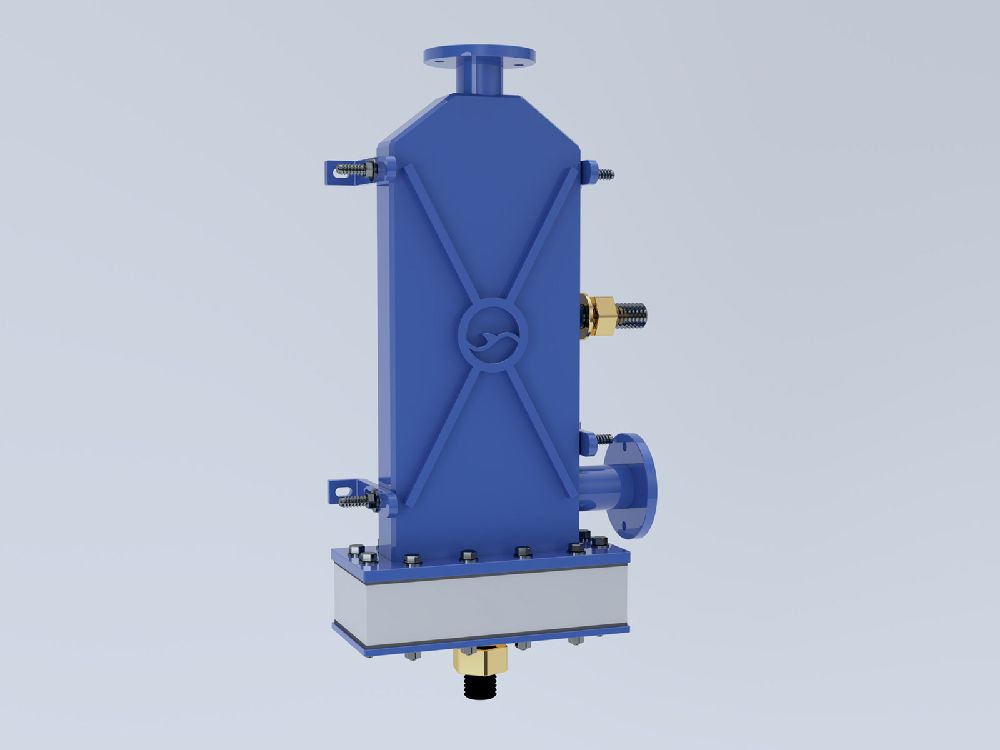
Electrolytic cells are devices manufactured by Tecnoseal to produce chlorine for disinfecting and cleaning seawater circuits in order to prevent marine fouling.
The chlorine production technique exploits the high salt content inside seawater.
The function of the cell is therefore to break the chlorine-sodium bonds, present within seawater, by applying a voltage difference between an activated titanium plate and a ferrous cathode.
Their use is typical in commercial or passenger ships.
Tecnoseal’s R&D department is developing very small systems for applications in Pleasure Yachts.

What they protect against
Electrolytic cells are used to prevent the formation of marine fouling within seawater circuits. Their current design is developed for installation on commercial vessels.
While not having a cathodic protection function, they become highly necessary to keep seawater circuit pipelines clean.
The reader is referred to the information brochure for further details.
The way we manufacture them
They are manufactured in-house by Tecnoseal; carpentry and LASER cutting and assembly departments successfully meet specific customer requirements very quickly.
Why you should choose Tecnoseal
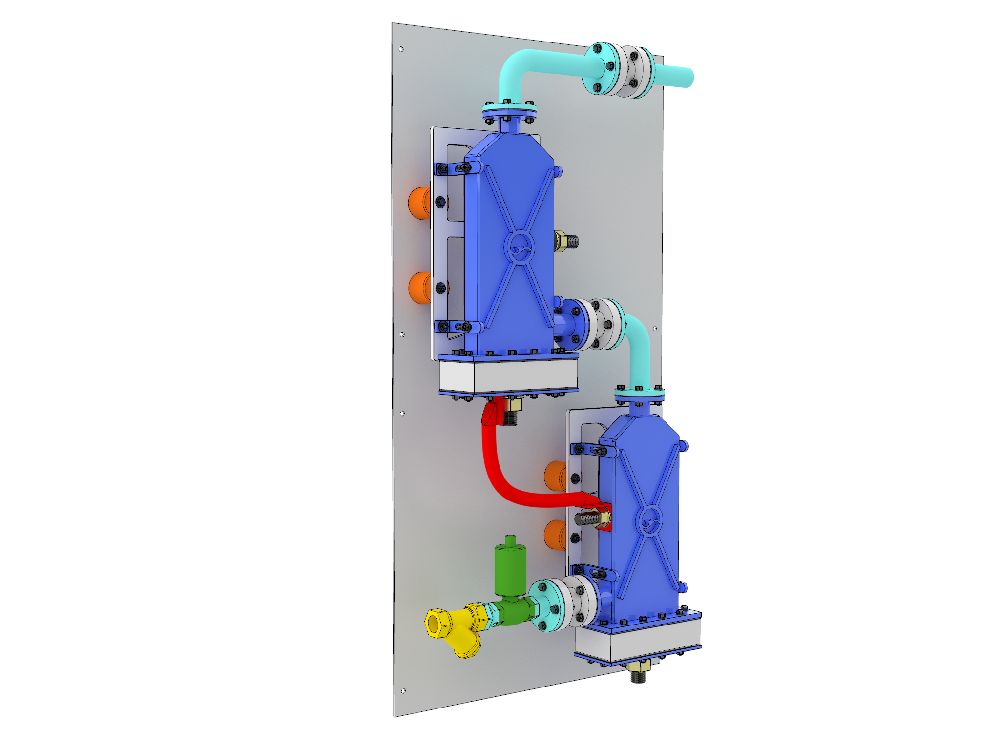
The choice of Tecnoseal’s electrolytic cells offers very important advantages because the product is very well maintained and should the customer request it, it is possible to supply the entire chlorination system already placed on appropriate panels.
The supply on panel has the major advantage of being plug&play.
After bulkheading the panel containing the cells, it will be necessary to make the connections to the seawater circuit and switch on the system again.
Do you want more information about this product?
Electrochlorination
A valid procedure to fight fouling and proliferation of micro and macro marine fouling inside a seawater circuit is electrochlorination.
Electrochlorination is the process by which chlorine is produced through
the direct current supply of activated titanium plates installed into
an electrolytic cell where the seawater flows.
The chlorine generated by electrolysis inside specific cells is
continuously distributed along the desired seawater circuit sections and
diluted according to the project’s need, ensuring the correct diffusion of the active agent.
Tecnoseal Electrolytic Cells
Tecnoseal has developed versatile and innovative electrolytic cells that, thanks to various technical features, are suitable both for the installation of new chlorination systems and for the replacement of existing systems.
Besides the electrolytic cell equipped with activated titanium plates,
Tecnoseal manufactures and sells all the parts, tools and accessories
part of an electro-chlorination system, except for the power supply.
Tecnoseal does not supply electrical panels, nor their installation, ordinary or extraordinary maintenance.
Electrical Insulation
A fundamental feature of Tecnoseals electrolytic cells is their electrical insulation, which ensures optimal system operation and puts operators in safety.
Besides the classic insulator stubs made of dielectric material installed at the inlet and outlet, Tecnoseal has
developed an insulation system of the anchoring screws through which
the cell is completely isolated from the panel connected to the hull
that is generally fixed to the bulkhead.
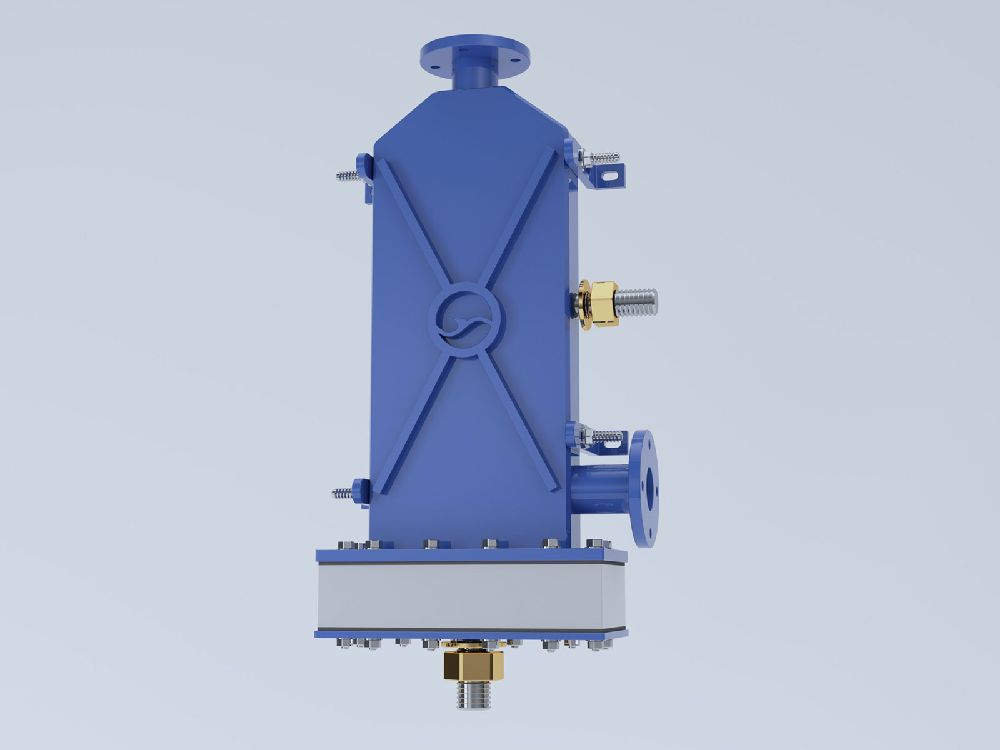
Our electrolytic cells are versatile thanks to the fixing brackets with oval holes that allow installation at variable distances from the panel. This allows us to replace easily these
elements on pre-existing chlorination systems, by adapting our system
to any dimensional specs, without sacrificing electrical insulation and
with minimum actions on other parts of the tube circuit.
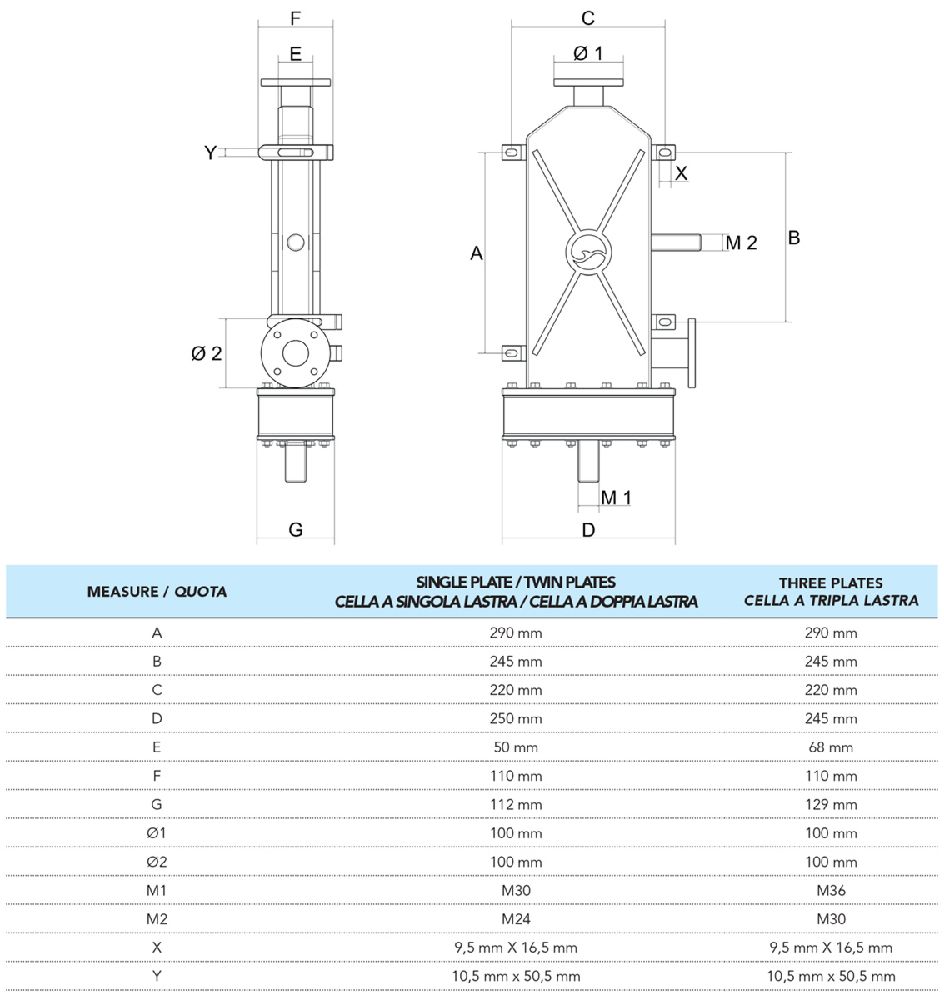
On varying of the general dimensions and flow rates of the systems, the
quantity of chlorine to be diluted in the circuit varies as well. To
satisfy any request, Tecnoseal produces three types of cells,
with different numbers of activated titanium plates depending on the
different flow rates and capacitive features of the circuit. The overall
dimensions of the cells change as shown in the chart that you can find
in gallery.