.png)
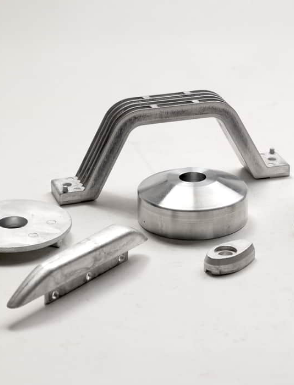
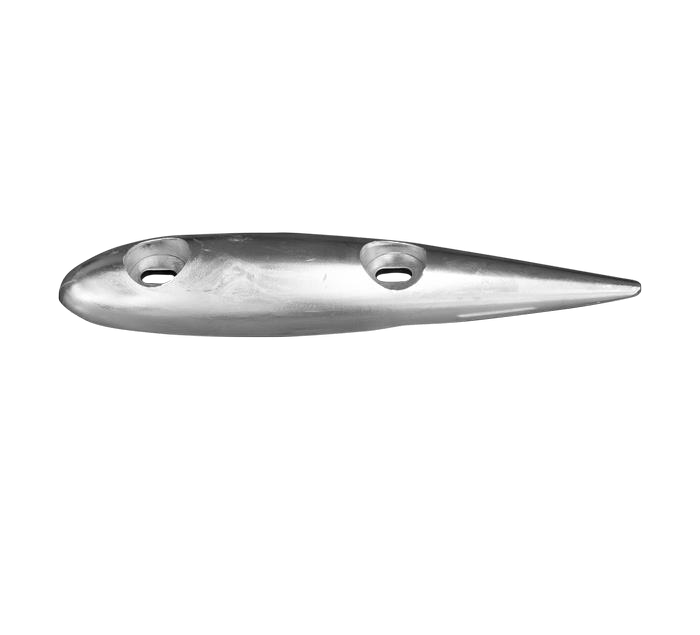
Sacrificial anodes
Zinc, aluminum and magnesium
sacrificial anodes
Tecnoseal sacrificial anodes combat electrolytic corrosion, protecting metals immersed in seawater, brackish water, or fresh water. Certified materials and advanced Made in Italy technology ensure maximum durability.
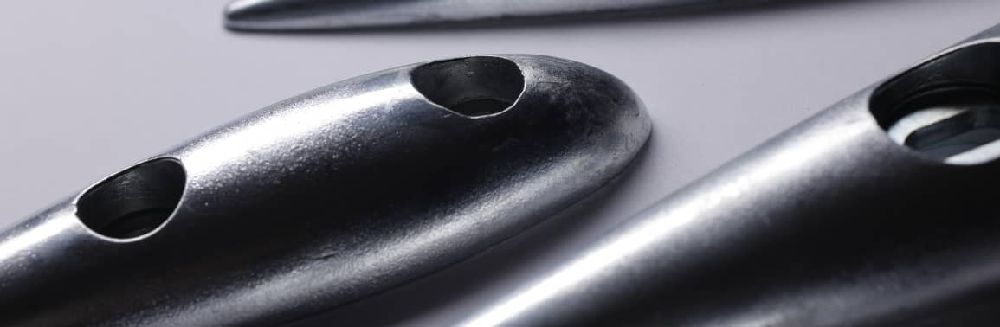
What sacrificial anodes are
Tecnoseal is world’s leading manufacturer of sacrificial anodes for cathodic protection against galvanic currents in the leisure boat market, and for shipping, offshore and industrial applications.
What they protect against
Their use is required to prevent corrosion of metals immersed in an electrolytic solution.
Seawater, brackish, or fresh water constitute the three primary natural electrolytes under which Tecnoseal operates with cathodic protection.
Any metal, when immersed within an electrolyte, undergoes a natural process transforming it over time into one of its oxides (iron will become iron oxide), thus impairing its electrochemical and mechanical characteristics.
Cathodic protection aims at sizing sacrificial elements (anodes) that by their constitutive nature, when applied in direct contact with an immersed metal, will form a galvanic couple regulated by an oxide-reduction reaction, slowing down the metal’s corrosion speed over time as opposed to fast consumption of the sacrificial element (anode).
The way we manufacture them
With over 30 years of experience, we manufacture Zinc, Aluminum and Magnesium anodes in our foundry in Grosseto (Tuscany), with the record to date as the producer of the widest range of anodes in the world: almost 2000 items as standard production and more than 3000 custom manufactured items specifically requested by customers.
The official Tecnoseal catalogue is the most comprehensive in the world in terms of products, making it an essential reference for shipyards, dealers and anyone dealing with cathodic protection.
Tecnoseal Foundry offers all the products in the catalogue in the three anodic alloys: Zinc, Aluminum and Magnesium.
Tecnoseal Foundry guarantees all products comply with alloy specifications.
By conducting spectrometric measurements in line with a specific cadence, the product is guaranteed to be compliant with the anodic alloy characteristic.
Zinc anode alloy: US Mil Spec. A-18001K
Bi Tee® Zinc anodic alloy: DNV RP B401
Aluminum anodic alloy: US Mil Spec. A24779 SH
Magnesium anodic alloy: US Mil Spec. A21412 SH
Why you should choose Tecnoseal
Choosing Tecnoseal will offer you the advantage of a reliable partner supplying a product always in compliance with alloy specifications.
The wide range of its products all “made in ltaly” as well as its efficient sales and logistics department make Tecnoseal the best partner to rely on for cathodic protection.
In addition to the products in the catalogue, Tecnoseal can supply all kinds of custom solutions in the field of cathodic protection.
The technical department and the workshop always pay special attention to commercial requests requiring highly custom solutions to be identified.
Tecnoseal is the only manufacturer in the world whose zinc-based anodic alloy conforms to DNV RP B401 and is completely environmentally sustainable as cadmium (Cd)-free.
The new alloy (Bi-Tee®) is a product designed and patented by Tecnoseal.
Compliance with DNV RP B401 has been validated at the laboratories of the Department of Chemistry, Materials and Chemical Engineering “Giulio Natta” of the Polytechnic of Milan.
All anodes in the catalogue can be manufactured according to the new alloy specification.
Do you want more information about this product?
Production of Sacrificial Anodes
The design and production of sacrificial anodes are entirely carried out in the TECNOSEAL plants in Italy.
The selection of raw materials and accessory components is carried out exclusively through certified producers, and each stage, from the delivery of materials to the shipment of final products, is carefully managed and controlled directly by a dedicated internal department.
Main departments:
- Design and engineering
- Component moulding
- Warehousing, packaging and shipping
- Gravity or die casting mould construction
- Product Finishing Department
- Laboratory testing with mass spectrometer
Each TECNOSEAL anode is designed, engineered and manufactured in accordance with the specified chemical composition of the US military reference standard.
Job-specific cathodic protection systems are also developed and manufactured at the Tecnoseal facility.
The evaluation is always carried out taking into account the individual requirements and type of problem.
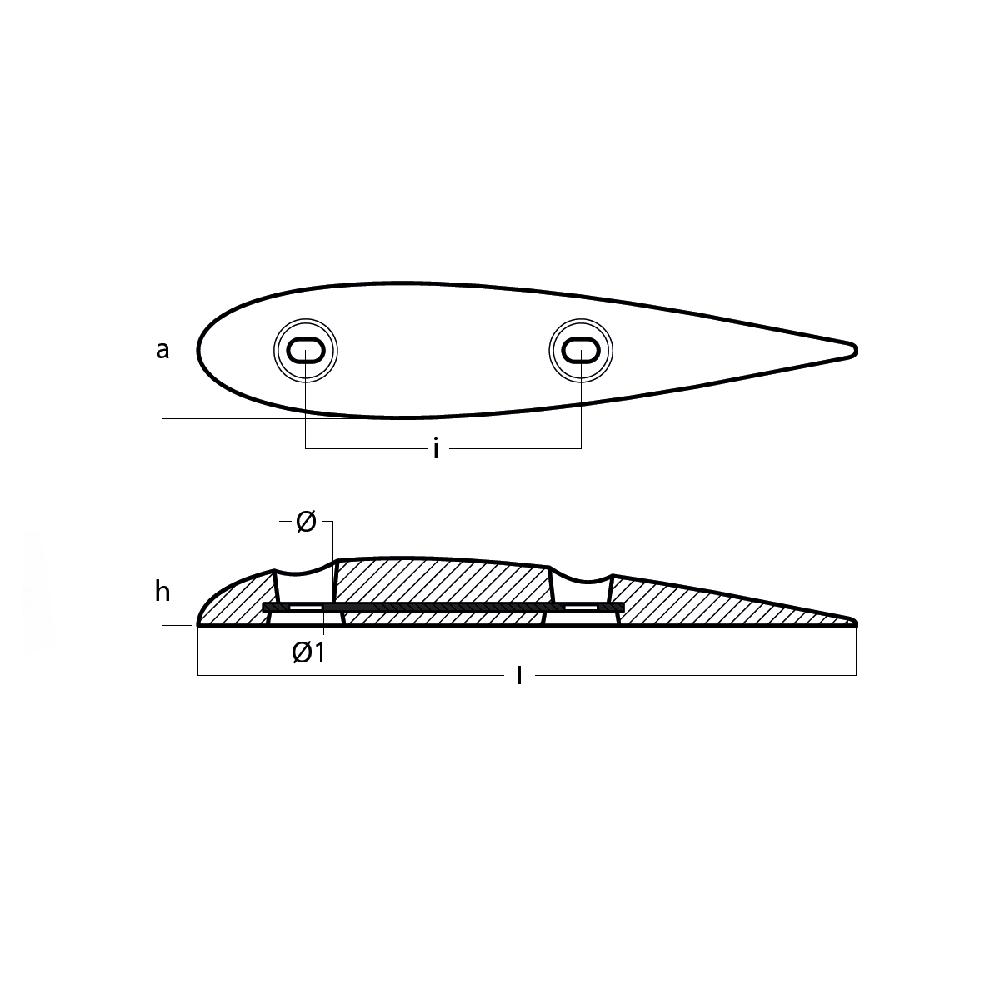
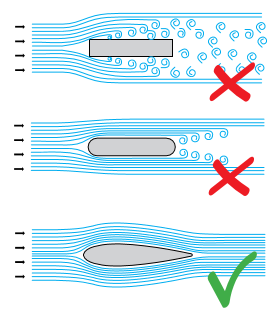
Cathodic Protection against Corrosion
Cathodic protection is typically approached according to two techniques: passive cathodic protection ( with sacrificial anodes ) and active cathodic protection ( impressed current ).
Both techniques aim to bring the average electrochemical potential of a chain of metals towards values such that each of them tends to be incapable of reacting chemically and turning into oxide.
This is achieved by imposing a current circulation between the sacrificial element ( passive protection ) or the electrode ( active protection ) and the metals to be protected against corrosion.
There are many fields of application for cathodic protection: from marine (nautical, naval, offshore, inshore, industrial, etc.) to terrestrial (aqueducts, gas, oil pipelines, etc.) as well as all those applications where a specific defence against electrochemical corrosion is required.
The anodes that we find installed in specific locations on vessels are part of a passive cathodic protection system.
The operating principle is very simple: the alloy of which the anode is composed, having an electrochemical potential lower than all metals used in the marine industry, triggers an electrochemical process that circulates an electric current from the anode to the cathode (the metal structure to be protected).
The migration of electrons from the anode to the structure to be protected makes the anodic alloy capable of reacting with other substances dissolved in water (OH groups) and transforming into soluble or insoluble oxides.
This complex phenomenology leads the anode to become less and less efficient as time passes until the moment when replacement becomes essential.
Anode efficiency is ensured by introducing chemical elements called activators into the alloy.
The other important function of activators is to fix the electrochemical potential of the anode at values determined on the galvanic scale.
Sacrificial anodes do not require a power supply to function, and no special maintenance is required either. The only care that needs to be taken is to replace them according to the times correctly indicated in the cathodic protection plan.
Sacrificial anodes can be used in: ships, tanks, offshore facilities, port installations, power plants, chemical plants, underground facilities.